Automatic Loader for Laboratory Press - Drive
Automatic device for loading and unloading products to be moulded using Gibitre model Drive press
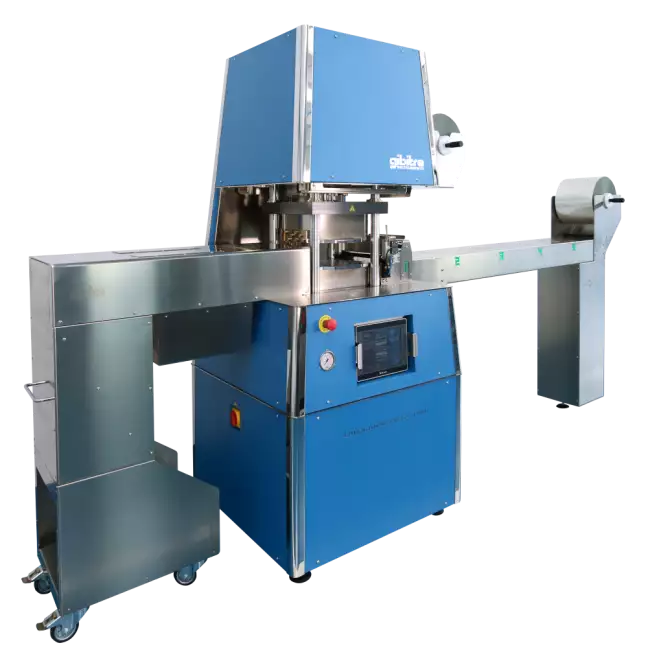


 
Automated system for preparing plates and test specimens: places parts and identification labels on a five-position loading belt. Suitable for rubber and thermoplastic materials, it delivers specimens ready for measurement with standard tools and instruments. A polyester carrier film wraps each molded part, preventing mold contamination and contact between parts. Downstream of the press, an air-cooling station stabilizes parts; a cutter separates them and stacks them in the unloading container. A PLC governs the loading/unloading loop and defines the molding cycle, ensuring uniform and repeatable timing. The press and feeder run stand-alone or via supervisory software to: map product sequence and position on the loading table; generate unique identification labels; assign per-sample molding cycles and trigger insertion at target test conditions; and log actual molding parameters, ensuring full traceability of preparation methods.

Overview 
The device makes it possible to automate plate and specimen preparation operations by placing the products to be moulded, and their identification labels, on the loading belt.
The device can be used for both rubber and thermoplastic product specimen preparation.
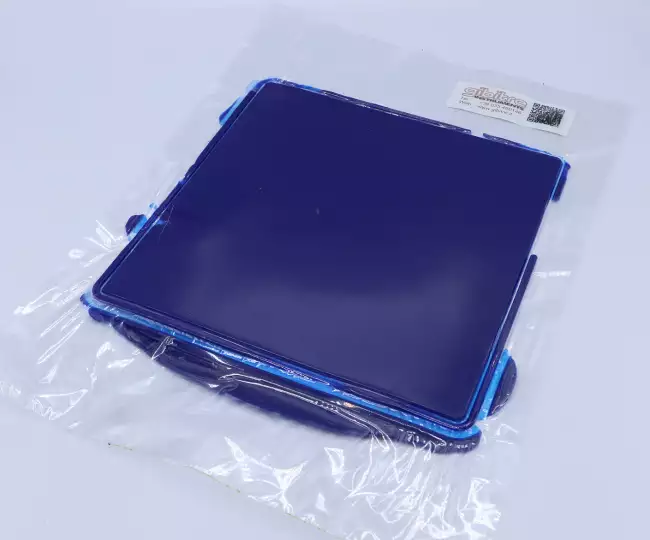
Specimens are handled by means of a Polyester film that wraps around the molded product, preventing mold contamination and mutual contact between the molded products.
The press control PLC automatically manages the specimen loading and unloading cycle and allows the definition of the molding cycle to be adopted ensuring uniformity in the control of the molding time.
The specimen unloading device includes an air cooling device to cool the molded products as they exit the press.
The cutting device allows the molded products to be separated and stacked in the unloading container.

Automatic Molding: Quality and Homogeneity of Specimens 
Specimens prepared by compression molding form the basis for testing activities for rubber and plastic product testing laboratories.

The results obtained in testing are strongly affected by the quality and homogeneity of the specimens used.
The automatic repetition of the operations of:
- inserting the specimen into the mold
- execution of the molding cycle
- removal and cooling of the specimen at the end of the molding time
guarantee a repeatability in the production process of the specimen that could not be achieved by performing the operations manually.
In addition, the use of film eliminates the problems associated with mold contamination and mutual contamination between different products.


Automatic Molding: Time Saving and Safety 
The activity of molding specimens can require a significant time commitment for the laboratory.
This is due to both the large number of molding cycles to be performed and the short time between two successive molds that require continuous interruption of other activities.
Manual execution of the molding cycle requires the presence of the operator for each individual operation of specimen insertion, activation of the molding wire, removal of the specimen, and eventual cleaning of the mold.
Automatic execution of the molding operations requires operator intervention only for the operation of placing the next 5 products to be molded on the loader.

In terms of safety and comfort, the use of the loader eliminates the residual risk associated with contact with hot surfaces and the need to wear heat-resistant gloves for specimen insertion and removal operations.

Gibitre_Press_Control Software 
The press and loader can work in Stand Alone mode or can be interfaced with control software that allows you to:
- Identify the sequence of products to be printed by indicating the position of the loading table on which to place each specimen
- Produce identification labels related to the individual specimen that allow its unique identification
- Define the molding cycle to use for each specimen, adjust the press, and activate specimen insertion when test conditions are reached.
- Record the actual molding conditions of each specimen ensuring traceability of preparation methods.


Loading products for moulding 
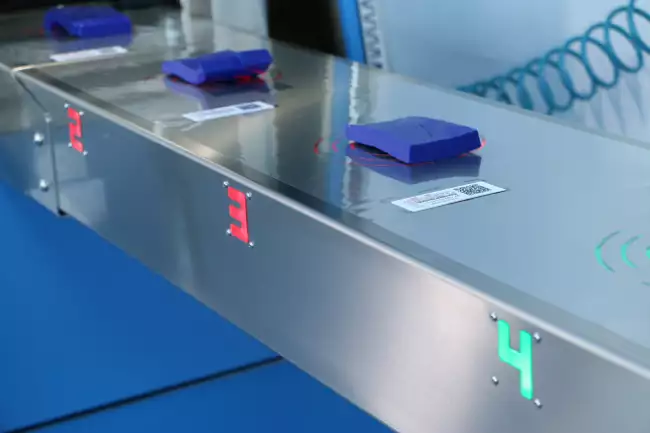
The 5-position loading table allows for the positioning of products to be moulded within the positioning pads highlighted by green-colored LED lights.
The position sensor identifies the presence of the specimen and confirms the engagement of the positioning pad by changing color.
The specimen identification label, to be placed within the designated area, is moved along with the product to be printed to ensure correct product identification at the end of the cycle.
The interlocked protection door of the press protects the product insertion areas and the molding area to ensure total sucurity of the entire process.
In case the press is used with Gibitre Press-Check Software, the identification of the specimen, the printing of the identification labels, the choice of the pad where to place the specimen and the choice of the molding cycle according to the product are done by the software.


The Moulding Cycle 
The PLC controller for the press is provided with a user-friendly Touch Screen Display and permits the free definition of the moulding cycles by setting:
• The displacements of the moving platen of the press,
• The thermal cycle (different temperatures of the platens and thermal gradients can be set within a moulding cycle)
• The pressure cycle (with the force control option installed).
40 Moulding cycles can be stored. Each cycle includes 30 moulding steps.
In case the press is used without software, you can manually select the moulding cycle to be used and start the automatic sample feeding system.
In case the press is used with the Gibitre Press-Control Software, you can select the moulding cycle for each individual sample. In this case, the press will automatically set the moulding conditions before starting the moulding of each sample.


Cooling of the samples 
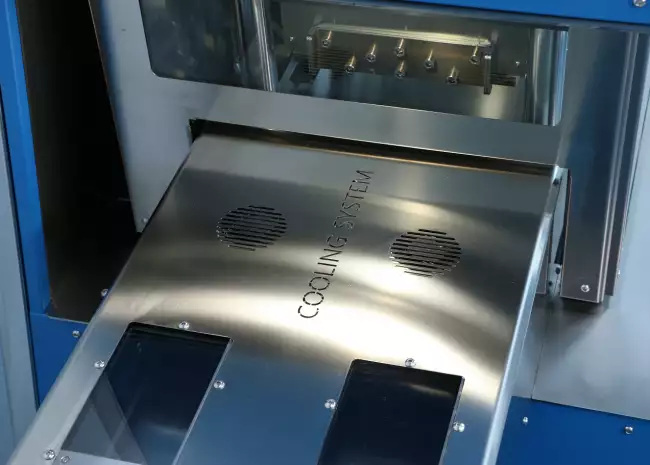
At the end of the molding cycle, the molded product is automatically taken out of the mold and placed in the cooling chamber, and subjected to a flow of cold air for a settable time.
This interrupts the curing process of the specimen to ensure homogeneity in heat input to the different molds, and accelerates the cooling process of the specimens to make them available for use in the shortest possible time.


Number of Loading Positions 
Presence Sensors of the Specimen 
Capacitive sensor for automatic recognition of specimen presence at loading stations 
Compressed air line pressure 
6 bar (min.) 
Compressed air consumption 
Approx. 25 NL/cycle 
Operational safety Conditions 
The specimen moving and molding cycle is done with safety guards always closed to avoid any risk of crushing and contact with hot surfaces of the operator 
Dimension of Press with Loading system 
(Width x Depth x Height) 3500 x 1123 x 1943 mm 


Gibitre Instruments
Via dell'industria, 18
Bergamo (Italy)
te. +39 035 461146
www.gibitre.it
info@gibitre.it

Copyright Gibitre Instruments
Automatic device for loading and unloading products to be moulded using Gibitre model Drive press
Campi di applicazione  >  Prove su pneumatici  >  Rheocheck MD - Drive
Automatic
Loader for
Laboratory
Press -
Drive
lab press auto loader: Laboratory Press with automatic loader: complete view of the machine.
Get a Quotation

Automatic device for loading and unloading products to be moulded using Gibitre model Drive press

Applications

Automated system for preparing plates and test specimens: places parts and identification labels on a five-position loading belt. Suitable for rubber and thermoplastic materials, it delivers specimens ready for measurement with standard tools and instruments. A polyester carrier film wraps each molded part, preventing mold contamination and contact between parts. Downstream of the press, an air-cooling station stabilizes parts; a cutter separates them and stacks them in the unloading container. A PLC governs the loading/unloading loop and defines the molding cycle, ensuring uniform and repeatable timing. The press and feeder run stand-alone or via supervisory software to: map product sequence and position on the loading table; generate unique identification labels; assign per-sample molding cycles and trigger insertion at target test conditions; and log actual molding parameters, ensuring full traceability of preparation methods.
Press to Start & Start to Press

Overview 

The device makes it possible to automate plate and specimen preparation operations by placing the products to be moulded, and their identification labels, on the loading belt.
The device can be used for both rubber and thermoplastic product specimen preparation.
Specimens are handled by means of a Polyester film that wraps around the molded product, preventing mold contamination and mutual contact between the molded products.
The press control PLC automatically manages the specimen loading and unloading cycle and allows the definition of the molding cycle to be adopted ensuring uniformity in the control of the molding time.
The specimen unloading device includes an air cooling device to cool the molded products as they exit the press.
The cutting device allows the molded products to be separated and stacked in the unloading container.

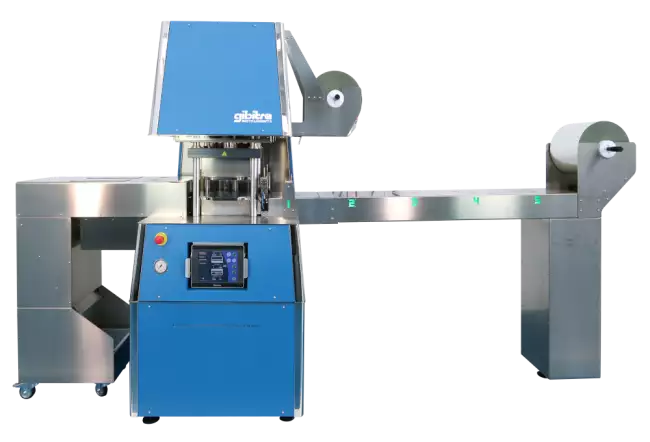
lab press auto loader: Laboratory press for preparation of specimens according to standards such as ISO 293, ISO 2393. Version with automatic loader. Full view of the machine.
Laboratory press for preparation of specimens according to standards such as ISO 293, ISO 2393. Version with automatic loader. Full view of the machine.

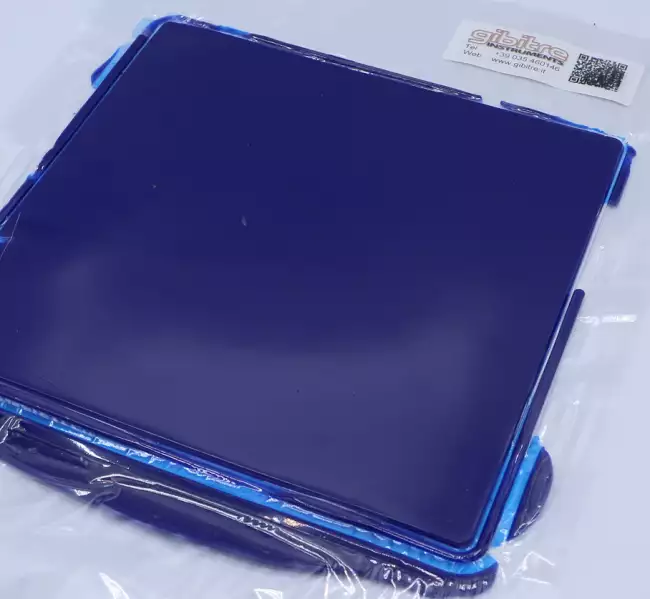
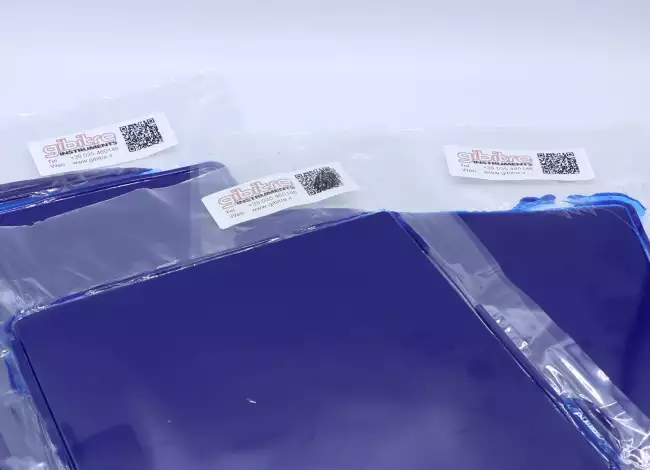
Automatic Molding: Quality and Homogeneity of Specimens 

Specimens prepared by compression molding form the basis for testing activities for rubber and plastic product testing laboratories.

The results obtained in testing are strongly affected by the quality and homogeneity of the specimens used.
The automatic repetition of the operations of:
- inserting the specimen into the mold
- execution of the molding cycle
- removal and cooling of the specimen at the end of the molding time
guarantee a repeatability in the production process of the specimen that could not be achieved by performing the operations manually.
In addition, the use of film eliminates the problems associated with mold contamination and mutual contamination between different products.

lab press auto loader: Laboratory press with automatic loader. Example of automatically made plate with protective film and unique identification. lab press auto loader: Laboratory press with automatic loader. Example of automatically made plate with protective film and unique identification. lab press auto loader: Laboratory Press with automatic loader: example of plate produced. lab press auto loader: Lab press with automatic loader: plates produced automatically in sequence.

Automatic Molding: Time Saving and Safety 

The activity of molding specimens can require a significant time commitment for the laboratory.
This is due to both the large number of molding cycles to be performed and the short time between two successive molds that require continuous interruption of other activities.
Manual execution of the molding cycle requires the presence of the operator for each individual operation of specimen insertion, activation of the molding wire, removal of the specimen, and eventual cleaning of the mold.
Automatic execution of the molding operations requires operator intervention only for the operation of placing the next 5 products to be molded on the loader.

In terms of safety and comfort, the use of the loader eliminates the residual risk associated with contact with hot surfaces and the need to wear heat-resistant gloves for specimen insertion and removal operations.


Gibitre_Press_Control Software 

The press and loader can work in Stand Alone mode or can be interfaced with control software that allows you to:
- Identify the sequence of products to be printed by indicating the position of the loading table on which to place each specimen
- Produce identification labels related to the individual specimen that allow its unique identification
- Define the molding cycle to use for each specimen, adjust the press, and activate specimen insertion when test conditions are reached.
- Record the actual molding conditions of each specimen ensuring traceability of preparation methods.

lab press auto loader: Software for laboratory press control. Main page. lab press auto loader: Software for laboratory press control. Main page. lab press auto loader: The data recording software for the laboratory press allows you to store the temperature and closing force curves for each molding cycle. Datagest software page that allows you to select and view the results.

Loading products for moulding 

The 5-position loading table allows for the positioning of products to be moulded within the positioning pads highlighted by green-colored LED lights.
The position sensor identifies the presence of the specimen and confirms the engagement of the positioning pad by changing color.
The specimen identification label, to be placed within the designated area, is moved along with the product to be printed to ensure correct product identification at the end of the cycle.
The interlocked protection door of the press protects the product insertion areas and the molding area to ensure total sucurity of the entire process.
In case the press is used with Gibitre Press-Check Software, the identification of the specimen, the printing of the identification labels, the choice of the pad where to place the specimen and the choice of the molding cycle according to the product are done by the software.

lab press auto loader: Laboratory press with automatic loader. Detail view of the product loading table.
Laboratory press with automatic loader. Detail view of the product loading table.

The Moulding Cycle 

The PLC controller for the press is provided with a user-friendly Touch Screen Display and permits the free definition of the moulding cycles by setting:
• The displacements of the moving platen of the press,
• The thermal cycle (different temperatures of the platens and thermal gradients can be set within a moulding cycle)
• The pressure cycle (with the force control option installed).
40 Moulding cycles can be stored. Each cycle includes 30 moulding steps.
In case the press is used without software, you can manually select the moulding cycle to be used and start the automatic sample feeding system.
In case the press is used with the Gibitre Press-Control Software, you can select the moulding cycle for each individual sample. In this case, the press will automatically set the moulding conditions before starting the moulding of each sample.

lab press auto loader: Laboratory press. PLC control. Main display page with example of speed-controlled heating. lab press auto loader: Laboratory press. PLC control. Main display page with example of speed-controlled heating. lab press auto loader: Laboratory press. PLC Control. List of stored and selectable molding cycles. lab press auto loader: Laboratory press. PLC control. Detail of a stored test cycle for automatic execution. lab press auto loader: Laboratory press. PLC control. Main display page with example of speed-controlled cooling. lab press auto loader: Laboratory-Press-Drive: the main page allows the selected test cycle to be activated.

Cooling of the samples 

At the end of the molding cycle, the molded product is automatically taken out of the mold and placed in the cooling chamber, and subjected to a flow of cold air for a settable time.
This interrupts the curing process of the specimen to ensure homogeneity in heat input to the different molds, and accelerates the cooling process of the specimens to make them available for use in the shortest possible time.

lab press auto loader: Laboratory press with automatic loader. Plate cooling system after molding.
Laboratory press with automatic loader. Plate cooling system after molding.

Technical specification

Number of Loading Positions  Presence Sensors of the Specimen  Capacitive sensor for automatic recognition of specimen presence at loading stations  Compressed air line pressure  6 bar (min.)  Compressed air consumption  Approx. 25 NL/cycle  Operational safety Conditions  The specimen moving and molding cycle is done with safety guards always closed to avoid any risk of crushing and contact with hot surfaces of the operator  Dimension of Press with Loading system  (Width x Depth x Height) 3500 x 1123 x 1943 mm 
References
Gibitre Laboratory Press
is currently installed in
42 countries
Request the List of top References
Download
General catalogue mail request

News
Call to action
Ask for quotation
a guided way to ask
for a quotation
Mail
info@gibitre.it
The good old e-mail
ready for every season
Phone
+39 035 460146
We welcome your calls Monday through Friday from 8:30 a.m. to 5:30 p.m. in your local time zone.
Newsletter
Subscribe
Stay updated
with the last news
of your sector
Local agent
from: -
See the whole list

In your country
in your language
at your service
Gibitre Instruments S.r.l., Via dell'industria 73, 24126 Bergamo Italia, pec@gibitre-instruments.it P. IVA: IT02827900164 CCIAA REA Bergamo: 326486 | ©2018 - 2026 Gibitre Instruments
Optimist.it
Welcome to the Gibitre Instruments web site
Please chose the preferred Cookie Management.
Benvenuti nel sito Gibitre Instruments
Per continuare scegliete la Gestione dei Cookie che preferite.
Cookies policy
For detailed informations about the use of cookies, please read our
Cookies Management Practice.

Gestione dei Cookies
Per maggiori informazioni sui cookie utilizzati consultate la nostra
Procedura sull'Uso dei Cookies.